What kind of story does the park rebuilt on military fortress and expo historical site hide?
日期:10-08-2019 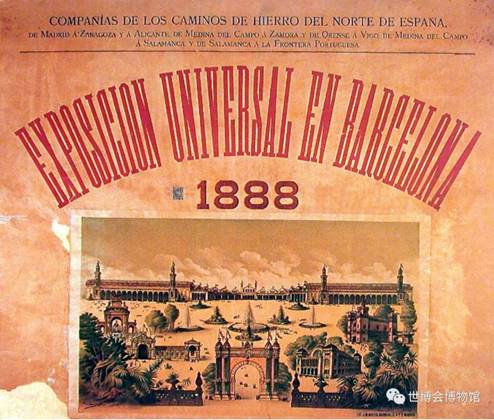
The poster of Expo 1888 Barcelona
Dates: 08/04/1888 - 10/12/1888
Theme: Fine and Industrial Art
Category: World Exhibition
Official Designation: Universal Exhibition of Barcelona 1888
Visitors: 2,300,000
Area (ha): 46.50
Participants: 30
Expo 1888 Barcelona was initiated by a Galicia entrepreneur Eugenio Serrano de Casanova and organized by the mayor of Barcelona Francesc Rius i Taulet, and they formed a "Committee of Eight" with the city's entrepreneurs.
The expo park includes the area from the Arc de Triomf, via Castle Park, the French Station and the Barcelona Marine Hospital. A quarter of the buildings in the park were designed by well-known architects. The most important project is T pavilion designed by Jaume Gustà i Bondia, and the castle park reconstruction project completed by Josep FontsereiMestre and the yet-to-be famous Antonio Gaudi iCornet.
The Exhibition of 1888 celebrated the urbanisation of Barcelona and its transformation into an industrial, commercial and cultural centre. The Expo was an opportunity for Spain, and notably Catalonia, to showcase its industrial strength, with a focus on technological advancements.
Meet at the Castle Park
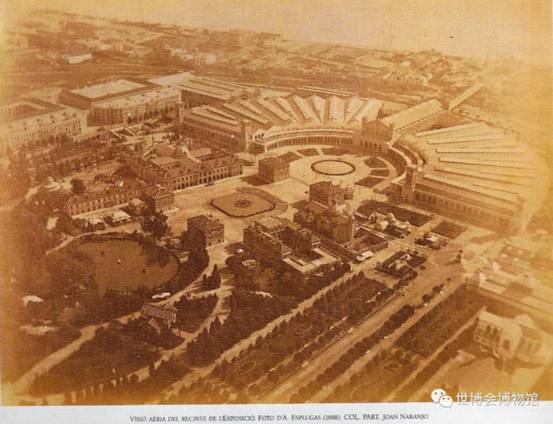
Expo 1888 Barcelona
The Expo was located in Parc de la Ciutadella, a newly developed park that replaced a military fortress. The 120x34 metre Palace of Industry was the Expo’s main building and its central hall was host to Spain’s exhibits. The pavilions of international participants and Spain’s regions were located in 24 nearby galleries.
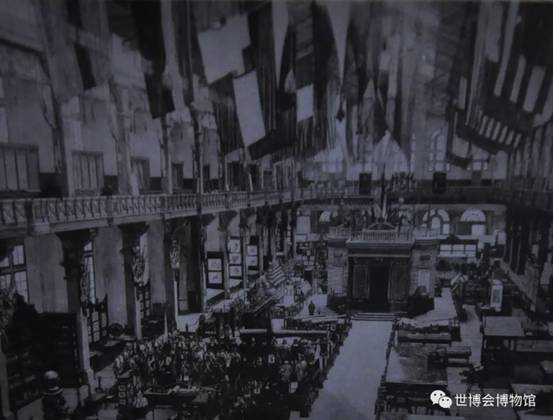
Government Exhibition area in Industry Pavilion
It was attended by 30 international participants, including popular displays from the US, China and Japan.The pavilions of international participants and Spain’s regions were located in 24 nearby galleries.
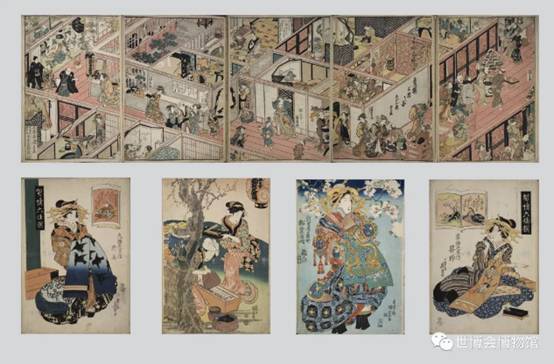
Japan Art
Exploring expo historical sites
Barcelona has a Arc de Triomf too?
The Arc de Triomf on the site is still one of the main symbols of Barcelona. Speaking of this, you may be wondering: isn't the arc DE triomphe in Paris? In fact, once a country win a war it will build a triumphal arch, there are more than 100 triumphal arch in ancient Europe, But the arc DE triomphe in Paris is the best known.
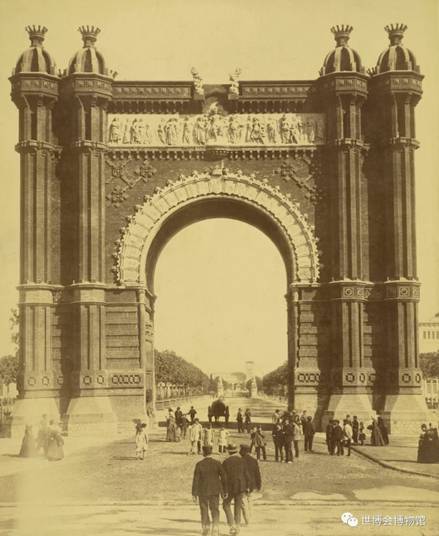
The Arc de Triomf in expo
The beauty of Barcelona's Arc de Triomf which was built for Expo 1888 Barcelona is not only for its gate, but also for the view behind it, because it was the entrance to the expo that year.
Take coffee at Tres Dragons
The neo-gothic Castell dels Tres Dragons was designed by Lluís Domènech i Montaner as a café-restaurant for the expo.
Tres Dragons took the shape of a medieval castle, the castle is named by the "Tres Dragons" which was created by the famous Catalan dramatist, founder of the Catalan Theatre Frederic Soler.
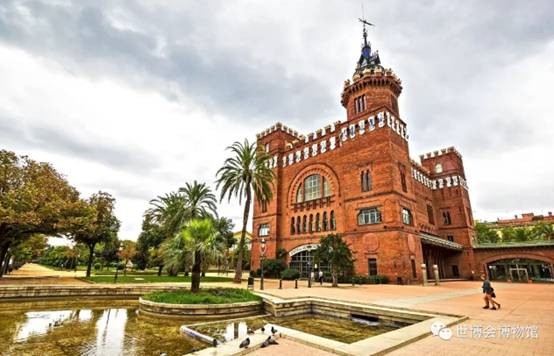
Tres Dragons
The building was inspired by the famous Amsterdam Stock Exchange at that time. The iron frame structure was combined with the Catalan red brick surface, with gothic style on the exterior and traditional design on the interior. The early Catalan modernist work mixed different styles and techniques.
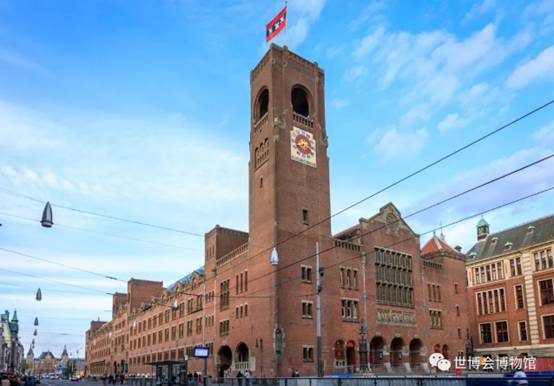
Amsterdam Stock Exchange
After Expo 1888 Barcelona, the castle was preserved and became the site of the Municipal Music School in Barcelona. Since 1920, the Ecological Museum has moved into the castle, which has become an important cultural and educational facility in Castle Park.
The enlightenment of the great navigator
An Italian who represents Spain
Columbus
Columbus was an Italian who loved sailing adventures from childhood. Columbus lobbied for more than a decade to carry out his plan. He lobbied Britain, France, Italy and Portugal, but was turned down; It wasn't until 1492 that queen Isabella of Spain recognized his talent and persuaded king Ferdinand ii to carry out Columbus's plan.
Columbus Monument
The iconic Columbus Monument was also built for the expo to commemorate Columbus's first voyage.
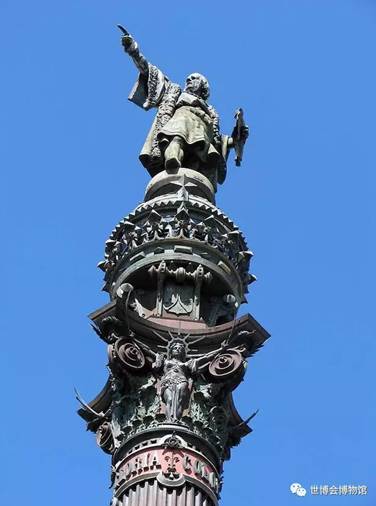
Columbus Monument
There are a series of embossment images depicting Columbus' first voyage and commemorates other members of his crew on the monument features. The embossment at the top describes Columbus pointing to the sea.
Barcelona hosted the expo for the first time in 1888. It contributed greatly to the growth of the local economy and urbanization, and enhanced Barcelona's position as a center of industry, commerce and culture.
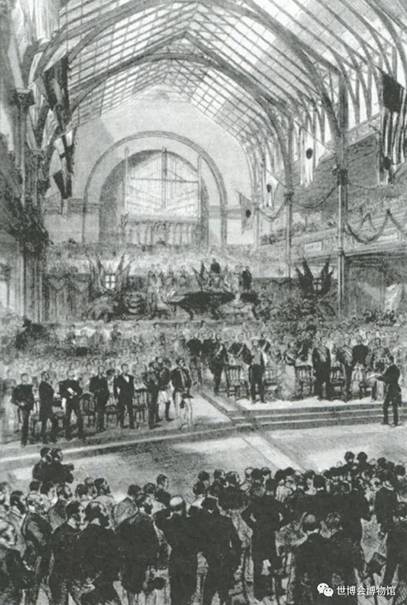
The opening ceremony
The expo gave Melbourne an opportunity to develop its infrastructure and industry, the city had electric lights, telephones, elevators and cable car systems because of it. The expo has also greatly promoted Australia's links with the world, establishing a direct shipping line between Australia and Marseilles and Bremen. The expo allowed the colony to establish direct trade relations with Germany, France, Belgium and the United States.
The expo invested 318,500 pounds, despite a loss of nearly 250,000 pounds, it had contributed to the increase in Australia's total trade, and showed that Australia was gradually integrating into the world system dominated by Europe. It also showed the ambition of Oceania to the whole world.