Now Open: See a Royal Haute Couture Showcase at the Imperial Colours Exhibition
日期:07-13-2026On the afternoon of July 6, Imperial Colours: Qing Dynasty Court Costumes from the Palace Museum held its opening ceremony at the WE Theatre of the World Expo Museum.
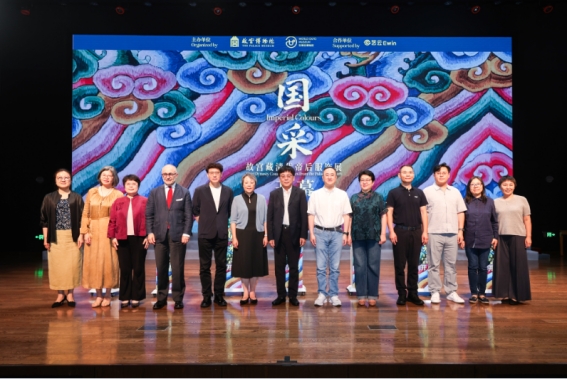
The exhibition presents more than one hundred precious textile and embroidery treasures from the Palace Museum, including formal court robes, festive robes, informal wear, garment fabrics, boots and socks, floral ribbons, and accessories. It interprets the ritual meanings, craftsmanship, and aesthetics of the age behind these objects, unlocking the codes of Chinese aesthetics woven into splendid robes and helping visitors appreciate the depth of Chinese civilisation across the millennia. The accompanying digital experience area, Seeing the Forbidden City in Shanghai, combines the virtual and the real, offering an immersive viewing experience that evokes the feeling of entering the Forbidden City and brings visitors closer to the creativity and wisdom of ancient China. The exhibition opens to the public on July 7 and runs through October 7.
Exhibition Highlights
More Than 100 Pieces of Royal Haute Couture, with Over 30 Percent Unveiled for the First Time
The court costumes of emperors and empresses represent a culmination of ancient Chinese ritual culture, textile craftsmanship, and Eastern aesthetics.
As the first large-scale court costume exhibition ever held in Shanghai, nearly 90 percent of the objects in this major exhibition are leaving Beijing for the first time, and more than 30 percent are being shown to the public for the first time. The 101 textile and embroidery cultural relics from the Palace Museum bring together robes and surcoats worn by the Kangxi, Qianlong, Jiaqing, and Tongzhi emperors, as well as robes and garment fabrics associated with six empress dowagers and empresses, including Empress Dowager Cixi, and related garments and accessories of several imperial consorts. It is a rare occasion to see them displayed together.
Among the Palace Museum’s collection of more than 100,000 textile and embroidery artifacts, the costumes of emperors and empresses form one of its most magnificent chapters. The colours, patterns, and craftsmanship embodied in these garments represent the highest level of ancient Chinese silk weaving and natural dyeing. They are truly an ancient form of Chinese haute couture, as well as a crystallisation of China’s fine traditional culture.
Centred on colour and structured around historical scenes, the exhibition is divided into six sections. It systematically presents the colour use and aesthetic meanings of Qing Dynasty costumes of emperors and empresses in settings such as sacrificial rites, court governance, festivals, and everyday leisure.
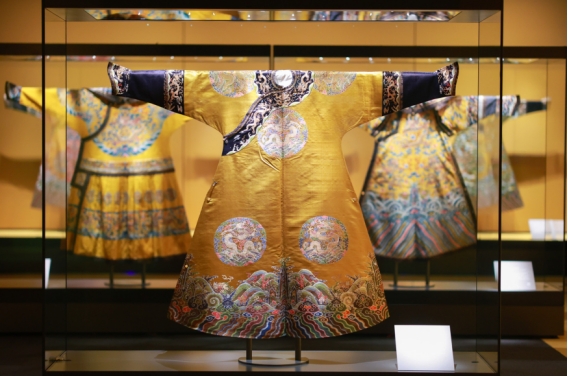
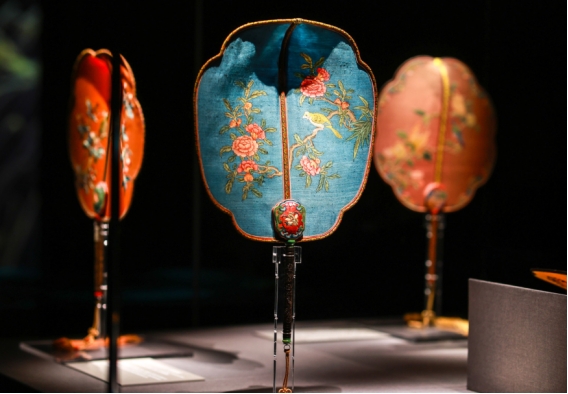
One Ticket for Two Exhibition Areas, with Highly Photogenic Interactive Experiences
In addition to the textile and costume relics exhibition area, the exhibition specially features the digital experience area Seeing the Forbidden City in Shanghai. One ticket grants visitors access to both areas.
Using technologies such as VR, naked-eye 3D, interactive screens, and multimodal interaction, the digital area creates nine interactive exhibits. Together with the costume relics display, it combines motion and stillness, and echoes the virtual with the real, giving visitors a more immersive exhibition experience and a series of memorable photo moments.
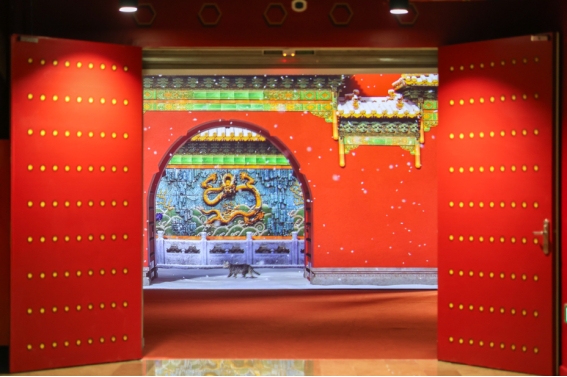
Complimentary Visitor Services, with Audio Guides Available Anytime
The exhibition also offers a free audio guide. By scanning QR codes in the gallery, visitors can listen on their mobile phones to explanations covering 46 key cultural relics and digital exhibits, as well as overview introductions to each section by Zhang Xin, curator from the Palace Museum. All audio guide content remains available for repeated listening even after visitors return home.
Nearly 100 Public Education Activities and 300-Plus Palace Museum Cultural and Creative Products
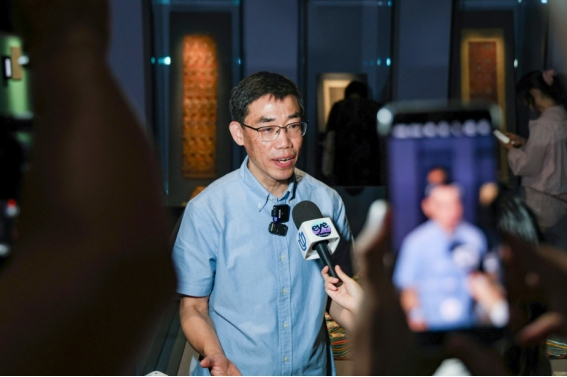
During the exhibition period, a series of public cultural lectures will be launched. Curators, specialists in traditional colour, weaving and dyeing practitioners, and Palace Museum experts will be invited to interpret the exhibition’s cultural meaning and traditional craftsmanship from multiple perspectives.
The first lecture, Concepts of Traditional Chinese Colour and Appreciation of the Guocai Exhibition, will be delivered by Zhang Xin, curator from the Palace Museum.
Throughout the exhibition, nearly 100 public education activities will be offered for different age groups and levels, focusing on court costume, ritual culture, patterns, and craftsmanship. These include hands-on experiences, themed workshops, children’s exhibition tours, and one-day camps. The exhibition’s accompanying traditional herbal dyeing workshop area will host programmes such as Leaves from the Book of Songs and Chinese Colours in the Royal Wardrobe, revealing the Guocai colours created through natural dyeing.
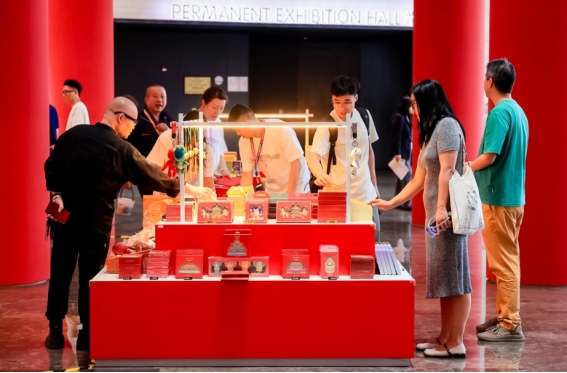
The cultural and creative products area will offer more than 300 exhibition-related items, mainly original products from the Palace Museum, allowing visitors to continue experiencing traditional culture and the beauty of the Forbidden City beyond the exhibition itself.
Ticket Information
Regular-price tickets for Imperial Colours: Qing Dynasty Court Costumes from the Palace Museum are now fully available. Several ticket categories are offered to meet the needs of different visitor groups, including standard tickets at RMB 88, duo tickets at RMB 138, concession tickets at RMB 68, and children’s tickets at RMB 9.9.
Visitors may purchase tickets through multiple platforms, including the World Expo Museum mini programme, Ctrip, Damai, Maoyan, and Hu Xiao You, or buy tickets on site at the Visitor Service Centre of the World Expo Museum.